
Why is natural tear production so important in dry eye?
Dry eye can happen when your eyes don’t have enough natural tears, whether from a problem making tears or too much tear evaporation.
Not producing enough natural tears is called tear deficiency. It can interfere with daily life by causing dry eye symptoms like:

EYES THAT FEEL IRRITATED

FLUCTUATING OR BLURRY VISION

WATERY EYES

REDNESS

EYE PAIN

TIRED EYES/EYE FATIGUE
Why do natural tears matter?
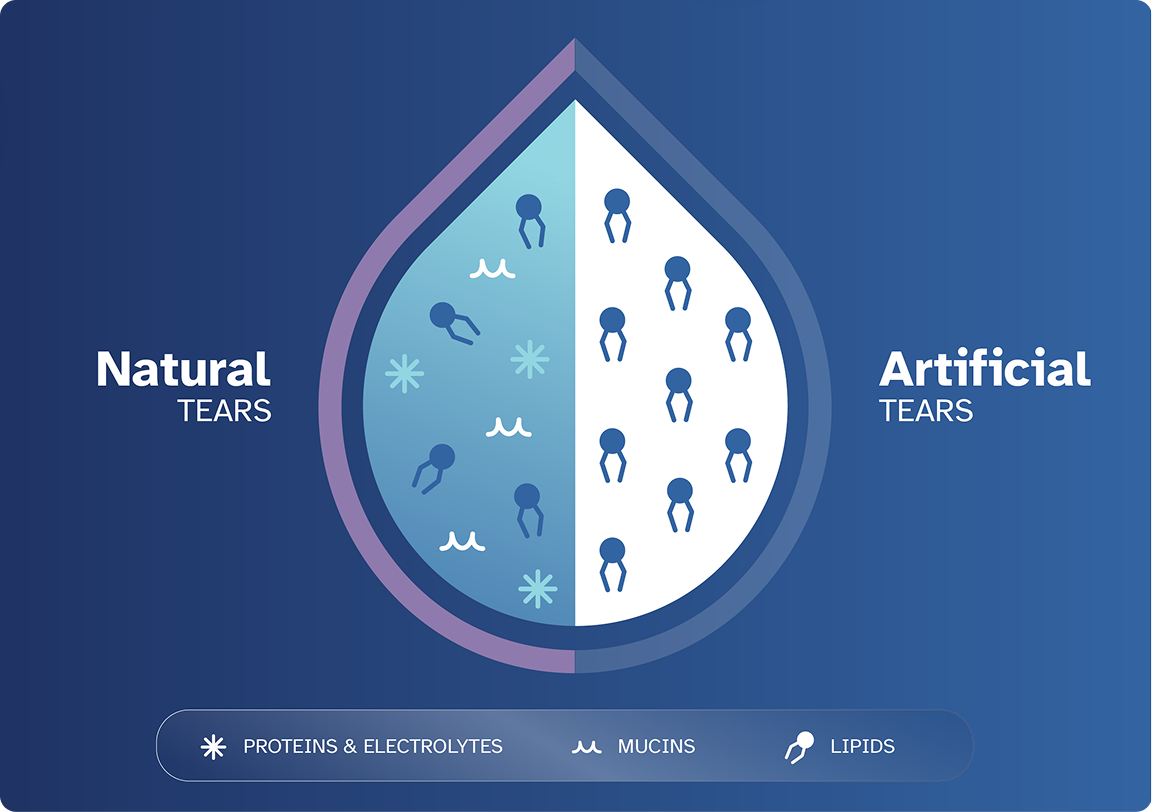
In healthy eyes, natural tears play an important role in keeping eyes healthy and comfortable.

Comfortable
Natural tears keep your eyes hydrated and free of debris.

Healthy
They also help nourish the surface of the eye.
Do you have dry eye symptoms? Do these symptoms interrupt your day?
Get ready for your next eye doctor visit with this personalized guide. Complete online and download, or email the results to yourself. Don't have time? Download to complete later.
Dannette's experience with TRYPTYR
“After a month, my eyes felt so much better. The relief that I’ve gotten is profound for me.”
—Dannette, a real TRYPTYR patient
Discover how TRYPTYR helps you make more natural tears
What is TRYPTYR?
TRYPTYR (acoltremon ophthalmic solution) 0.003% is a prescription eye drop used for the treatment of the signs and symptoms of dry eye disease (DED).
IMPORTANT SAFETY INFORMATION
- Use TRYPTYR exactly as your healthcare provider tells you to.
- TRYPTYR is for use in the eye. Each single-dose vial of TRYPTYR will give you enough medicine to treat both of your eyes. TRYPTYR vial is for 1-time use only. Use right away after opening and do not reuse.
- Keep the unopened single-dose vials in the original foil package until ready to use.
- Wash your hands before each use. Do not let the tip of the single-dose vial touch your eye or any other surface to avoid eye injury or infection.
- If you use TRYPTYR with other eye medicines, wait at least 5 minutes between using TRYPTYR and the other medicines.
- If you wear contact lenses, remove them before using TRYPTYR. Wait 15 minutes after dosing before putting contact lenses back in your eyes.
- Call your healthcare provider right away if you get an allergic reaction or other eye problems such as eye injury, eye infection, or eye pain.
- The most common side effect of TRYPTYR in clinical trials was burning or stinging sensation in the eye upon instillation, which was reported in 50% of patients.
For additional information about TRYPTYR, talk to your healthcare provider and click here to see the full Prescribing Information.
You are encouraged to report negative side effects of prescription drugs to the FDA. Visit www.fda.gov/medwatch or call 1-800-FDA-1088.